Catholic · Emmaus course
Seeing the Whole Person: The Eleven Premises of the Catholic Christian Meta-Model of the Person
A clinician's framework for assessing the whole person, for clients of any faith.
Most assessment models see one dimension of a person at a time. The Catholic Christian Meta-Model sees the whole. In this lesson, Drs. Craig Titus and William Nordling introduce the model's eleven premises and develop the first two: that the person is a body-and-soul unity, and that the person is fulfilled through vocation. Using a real family case, they show how these premises reshape assessment for clients of any faith.
NBCC CE · 1 clock hour
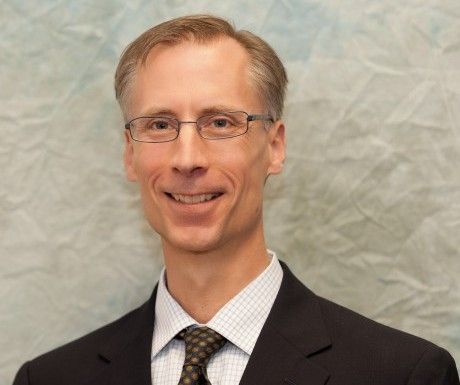
With Craig Steven Titus, S.T.D., Ph.D. and Dr. William Nordling

- Length
- 1 hr
- Lessons
- 1
- Level
- Intermediate
- Version
- Catholic
- Price
- Free
they want to understand the person in front of them well enough to assess and treat accurately
About this course
You did not choose your model of the person. It was running quietly the moment your first client sat down, deciding in advance what you would treat and what you would call health. This course asks you to make that model explicit, and then to make it more accurate.
Drs. Craig Titus and William Nordling introduce the Catholic Christian Meta-Model of the Person, a framework built from eleven premises, eight general and three faith-based. You will work through the first two in depth. The person is a unity, a body-and-soul whole whose physical and spiritual life act on each other, which means a symptom can never be understood apart from the person who carries it. And the person is fulfilled through vocation, through the call to a moral and spiritual life, through the states of life, and through work, service, and meaningful leisure.
Watching the lecturers assess an eight-year-old boy and his family, you will see what changes when you read a presenting problem against a person's developmental history, relationships, culture, and callings rather than a symptom list alone. The model is rooted in a Christian vision of the person, and it is built to be used with clients who believe and clients who do not.
The lesson carries two enrichment readings, one psychological and one spiritual, that take the premises further than the video can, drawing on DMU faculty scholarship and the Christian intellectual tradition. It closes with a ten-question post-test and earns 1.0 NBCC clock hour for licensed counselors.
By the end, you will be able to describe the Meta-Model's structure, explain its first two premises, and apply a vocation-attentive, whole-person assessment to your own clinical orientation.
Who this course is for
Licensed counselors and pastoral care professionals seeking NBCC continuing education
Counselors do not want "a model"; they want to understand the person in front of them well enough to assess and treat accurately.
From the course syllabus
You did not choose your model of the person. It was running quietly the moment your first client sat down, deciding in advance what you would treat and what you would call health. This course asks you to make that model explicit, and then to make it more accurate.
Drs. Craig Titus and William Nordling introduce the Catholic Christian Meta-Model of the Person, a framework built from eleven premises, eight general and three faith-based. You will work through the first two in depth. The person is a unity, a body-and-soul whole whose physical and spiritual life act on each other, which means a symptom can never be understood apart from the person who carries it. And the person is fulfilled through vocation, through the call to a moral and spiritual life, through the states of life, and through work, service, and meaningful leisure.
Watching the lecturers assess an eight-year-old boy and his family, you will see what changes when you read a presenting problem against a person's developmental history, relationships, culture, and callings rather than a symptom list alone. The model is rooted in a Christian vision of the person, and it is built to be used with clients who believe and clients who do not.
The lesson carries two enrichment readings, one psychological and one spiritual, that take the premises further than the video can, drawing on DMU faculty scholarship and the Christian intellectual tradition. It closes with a ten-question post-test.
By the end, you will be able to describe the Meta-Model's structure, explain its first two premises, and apply a vocation-attentive, whole-person assessment to your own clinical orientation.
Curriculum
-
Module 1
Overview of 11 Premises of CCMMP - Titus
- 1.Lesson: An Overview of the Eleven Premises of the Catholic Christian Meta-Model
More courses

When God Feels Silent: Discerning Consolation in Prayer
Ever prayed and felt nothing? You aren't doing it wrong. In this Divine Mercy University course, discover how God speaks, why feelings aren't the goal, and how St. Teresa’s garden analogy shows if your prayer life is truly growing.
1 hr · 1 lesson · Intermediate
With Fr. John Bartunek, LC

You Shall Not Be Overcome: Spiritual Vanity, Sacred Darkness, and the Peace That Persists
Why does prayer go dry? Fr. Groeschel reveals the hidden danger in spiritual progress — and the ancient promise that will carry you through.
1 hr 25 min · 3 lessons · Intermediate
With Fr. Benedict Groeschel, C.F.R.

Failure Is Not an Option: Leadership, Decision-Making & Virtue Under Pressure
An asynchronous, six-lesson formation course that uses six scenes from the film Apollo 13 (1995) — set beside the real April 1970 mission — as a case study in how good decisions get made and good character is revealed when everything is on the line.
3 hrs · 8 lessons · Beginner