The STEP model · with Divine Mercy University
Care where people already belong.
Jesus said that where two or three gather in his name, he is there in the midst of them. Every ministry a church runs is a way of doing that. Presence+ works inside those ministries. It trains the people already in them, at every level of care, and sees that whoever asks for help ends up with someone who can help, with a licensed clinician close by when that is what they need. Everyone in it helps someone, and everyone has a pathway of their own.

137MAmericans live in mental health shortage areas
27%of the need in those areas is being met
~80%of people seeking help need accompaniment, not a diagnosis
1 in 4who seek help for a mental disorder go to clergy first
Find your door
Who are you here as?
Six kinds of people come here. Each has a page and one next step.
Looking for help
On your road to flourishing or healing. Start with what is right with you, and with a person to walk with you.
Ask for help
Churches and campuses
Keep your name and your rhythm. Add trained presence and a next step. The Community tier is sponsored.
Start a first cohort
Helpers
Companions, listeners, ministers, spiritual directors, and coaches who do not bill.
Start the Companion course
Clinicians
Licensed caregivers, and credentialed helpers who bill by the hour, in Mindspirit.
See Mindspirit
Organizations
Dioceses, networks, universities, schools and ministries that work inside or alongside churches.
Partner with us
Learners
Short courses from Divine Mercy University faculty, on a pathway of your own.
Browse the courses
STEP
Care is a continuum. People move along it by their own feedback.
STEP stands for Support, Through a trained person, Efficiently, with Presence. It names four levels, from a friend to a psychiatrist, and Presence+ provides training, support and software at each one. Most people are served well by a friend or a trained helper. Clinicians are kept for the people who need them, and when therapy ends the person goes back to someone who knows them.
Everyone is both
Everyone helps someone. Everyone has a pathway.
My pathway
There is no helper class and no helped class. A therapist has a pathway in the app. So does a man two years into recovery who now walks with the next one. The pathway holds that person's courses, practices and relationships, and it goes with them when they step up or down.
Everyone gives feedback, and everyone receives it
After each conversation the person says how they are doing and how the relationship is going. The helper hears it. The same measures run for a Companion and for a psychiatrist, so a score means the same thing at every level, and the scores are what move a person along the continuum. Who may help, and in what scope, is set by the leadership of the helper's own community.
The suite
Two ways in. One record.
Anyone who wants help uses the Presence+ app. Companions and church or campus staff help through Raphael. Coaches, guides and clinicians work in Mindspirit. Every app runs on a phone and on the web, and all of them share one record, held in the Presence+ data store, so a person can move from a friend to a pastor to a clinician without starting over. The person, their helper and the community's leadership each decide what is shared.
For anyone who wants help
Presence+ app
Ask for help, meet your helper, follow your pathway, say how it is going. Phone and web.
For Level 1 and 2 helpers
Raphael
Where Companions and church or campus staff invite, listen and walk alongside. Phone and web.
For parishes, campuses and community groups
Midst
Intake, matching and reporting for a community, inside the ministries it already runs.
For every helper
Emmaus
A learning platform where any organization can publish and share formation courses.
For Level 3 and 4 helpers
Mindspirit
Practice management and an EHR: scheduling, notes, billing, measures.
For deliberate practice
Melete
AI simulation for deliberate practice, scored against published fidelity scales.
Why it works
The relationship predicts the outcome better than the method does.
Across decades of psychotherapy research, the helper and the relationship account for about five times as much of the change as the technique. So STEP forms helpers and measures relationships, instead of trying to license its way out of the gap.

Why this exists
The Church has always been how strangers learn to trust each other.
Every institution that lets large numbers of people work together runs on words: laws, records, ledgers, a religious canon. For the first time something other than a human being can read those words better than we can, and it is moving into the institutions that run on them. Presence+ was built so that the Church, the oldest of those institutions, keeps its help in human hands.
Babel was one language and one tower. Pentecost was many languages, understood. We are building a common language for ministries so that people, not machines, can work together.
01
One record, held by a better steward
A parish, a campus, a counselor and a companion each kept their own list, usually in a free online tool whose owner set the policy for the data and often sold it. A person who asked for help in one place was invisible in the next. On the Presence+ Network a community keeps that record in a data store that is not for sale, and three parties decide what happens with it: the person, their helper, and the community's leadership.
02
Helping is presence
A machine can hold what can be written down: consent, measures, the next step. It cannot sit with a person. The Network holds the first kind of thing so that a person can give the second. That is why the name is Presence.
03
People decide. The system remembers.
No machine decides anything about a person here. A companion, a pastor or a clinician decides, under the leadership of the organization they serve in. The person consents. The record keeps what was decided and who may see it. AI inside the Network prepares, summarises and suggests; it does not judge, refer or rank anyone.
04
It is only personal
A message comes from a person who knows you, never from a campaign. Success is the turn: the moment someone who was helped begins to help.
From the CCMMP
Today's reading from the Catholic Christian Meta-Model of the Person.
The CCMMP publishes every day on the news, books and questions of the moment, read through the Model of the Person. Each piece opens on ccmmp.com.

CCMMP · Sep 2, 2026
Bringing Divine Mercy to the Catholic University of America
Father Charles Sikorsky announced on August 12th that Divine Mercy University will move to the Catholic University of America campus in the summer of 2027. The relocation centers on O'Boyle Hall, currently home to Catholic University's school of psychology, which is now under renovation. The move builds on an existing clinical partnership between the two institutions.
Read on ccmmp.com
CCMMP · Sep 1, 2026
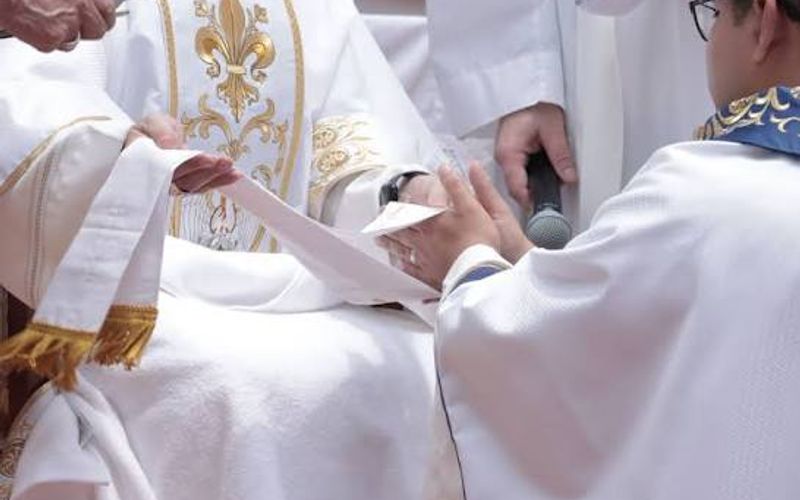
When Bishops and Formation Teams Disagree: An Incoherence at the Heart of Seminary Discernment
A McGrath Institute report finds that 22% of U.S. bishops would ordain men with deeply rooted homosexual tendencies, a rate far above that of seminary rectors, formation directors, and vocation directors. The gap is not merely statistical — it reveals a broken chain of accountability in priestly formation that the 2005 Vatican Instruction was designed to prevent.
Read on ccmmp.com
CCMMP · Aug 25, 2026
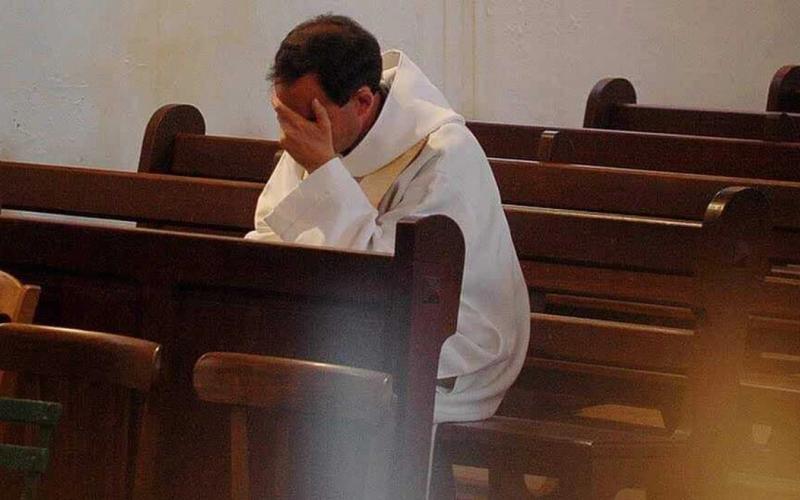
What Child Centered Play Therapy Can Teach a Priest (and an Adult in General)
Child-Centered Play Therapy identifies a basic human need: every person requires at least one place where they can bring anger, sadness, and frustration and still be accepted. A priest whose prayer life and fraternal bonds cannot fill that role faces a structural crisis, not merely a personal failing — one that drives unmet needs toward unhealthy outlets.
Read on ccmmp.com
Honest about scope
Every helper can say what is theirs and what is not.
A psychiatrist can hand a question of meaning back to a person's faith. A pastor can send someone back to the doctor before anyone changes a dose. STEP trains each level to name its scope early and to know that the next step exists.
Bring STEP to a community you serve
Parishes, campuses and community groups start on the sponsored Community tier, from a nonprofit with no profit motive. We will show you what a first cohort looks like and tell you where the network stands today.