Catholic · Emmaus course
Male and Female, Body and Soul: The Science of Sex Differences for Clinicians
What the body knows about men and women
Sex differences are real, measurable, and clinically relevant. Explore the biology, brain, and complementarity of man and woman through a Catholic view of the whole person, and learn to accompany clients with science, clarity, and respect.
NBCC CE · 0.75 clock hours · Social and Cultural Foundations
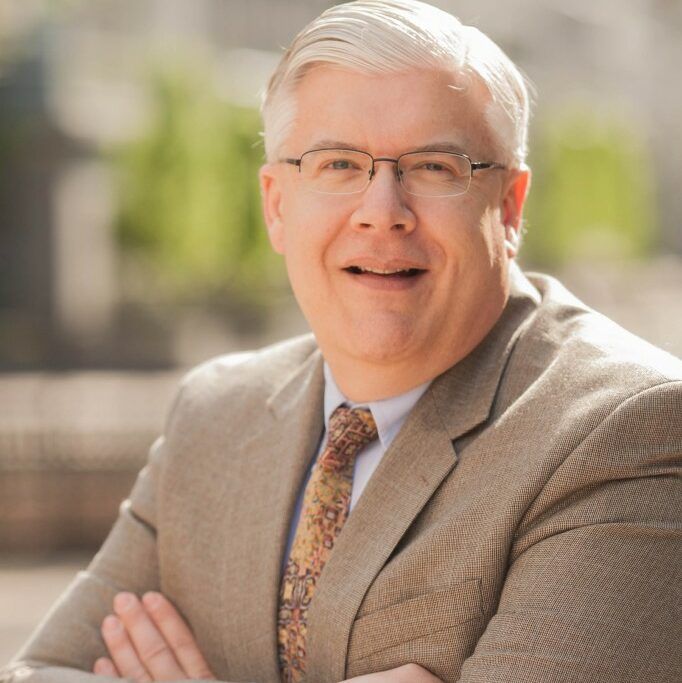
With Harvey Payne, Psy.D.

- Length
- 55 min
- Lessons
- 1
- Level
- Intermediate
- Version
- Catholic
- Price
- Free
For this audience the job is confidence — the ability to sit with a client's questions about sex and gender without feeling out of their depth, and without abandoning either the science or their faith.
About this course
Few subjects put a counselor on the spot faster than sex and gender. In this short, self-paced course, Harvey Payne, PsyD, starts where the difference is actually written — the X and Y chromosomes — and works outward through the questions you keep meeting: where "gender theory" came from, what brain research really shows, and what the evidence says about an identity that is biologically grounded and culturally shaped. You'll read the science the way good researchers do — as averages with real overlap — and see it through the Catholic Christian Meta-Model of the Person and John Paul II's Theology of the Body, so the science ends where your work begins: with a person to understand and respect. Earn 0.75 NBCC clock hours (Social and Cultural Foundations).
Who this course is for
Licensed counselors in Catholic or faith-adjacent settings
A licensed counselor, often in a Catholic or faith-adjacent setting, keeps meeting sex and gender in the consulting room and in the culture.
Common questions
- Is this just biology?
- "Body and Soul" tells a Catholic clinical audience, in four words, that this is integrative rather than reductionist. It quietly answers the objection before it's raised.
From the course syllabus
Few subjects put a counselor on the spot faster than sex and gender. The science is easy to caricature, the culture is loud, and the client in the room deserves better than either a slogan or a shrug. In this short, self-paced course, Harvey Payne, PsyD, starts where the difference between the sexes is actually written — the X and Y chromosomes — and works outward through four questions every clinician runs into: where contemporary gender theory came from, what brain and hormone research really shows, how a serious critic answers the evolutionary and feminist accounts, and what the newest evidence says about an identity that is biologically grounded and culturally shaped.
Curriculum
-
Module 1
Male and Female, Body and Soul: The Science of Sex Differences for Clinicians
- 1.Lesson: Male and Female, Body and Soul: The Science of Sex Differences for Clinicians
More courses

When God Feels Silent: Discerning Consolation in Prayer
Ever prayed and felt nothing? You aren't doing it wrong. In this Divine Mercy University course, discover how God speaks, why feelings aren't the goal, and how St. Teresa’s garden analogy shows if your prayer life is truly growing.
1 hr · 1 lesson · Intermediate
With Fr. John Bartunek, LC

You Shall Not Be Overcome: Spiritual Vanity, Sacred Darkness, and the Peace That Persists
Why does prayer go dry? Fr. Groeschel reveals the hidden danger in spiritual progress — and the ancient promise that will carry you through.
1 hr 25 min · 3 lessons · Intermediate
With Fr. Benedict Groeschel, C.F.R.

Failure Is Not an Option: Leadership, Decision-Making & Virtue Under Pressure
An asynchronous, six-lesson formation course that uses six scenes from the film Apollo 13 (1995) — set beside the real April 1970 mission — as a case study in how good decisions get made and good character is revealed when everything is on the line.
3 hrs · 8 lessons · Beginner